You may remember neuroscientist Miguel Nicolelis — he built the brain-controlled exoskeleton that allowed a paralyzed man to kick the first ball of the 2014 World Cup. What’s he working on now? Building ways for two minds (rats and monkeys, for now) to send messages brain to brain. Watch to the end for an experiment that, as he says, will go to “the limit of your imagination.”
Miguel Nicolelis: Brain-to-brain communication has arrived. How we did it | Talk Video | TED.com.
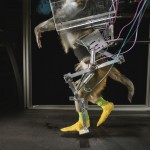 A rhesus macaque walks with the aid of a pneumatically powered exoskeleton controlled by a computer reading signals from electrodes implanted in the monkey’s motor cortex. Miguel Nicolelis and colleagues at Duke University are developing similar devices that could allow paralyzed humans to walk again.
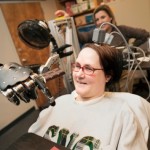 Robotic limb advances are attracting serious attention from the FDA.
 Course description
The Future of Brain Implants
Brain implants today are where laser eye surgery was several decades ago. They are not risk-free and make sense only for a narrowly defined set of patients—but they are a sign of things to come.
via WSJ.