Tag Archives: food insecurity

Developing a Nutrition Policy for the Arkansas Rice Depot

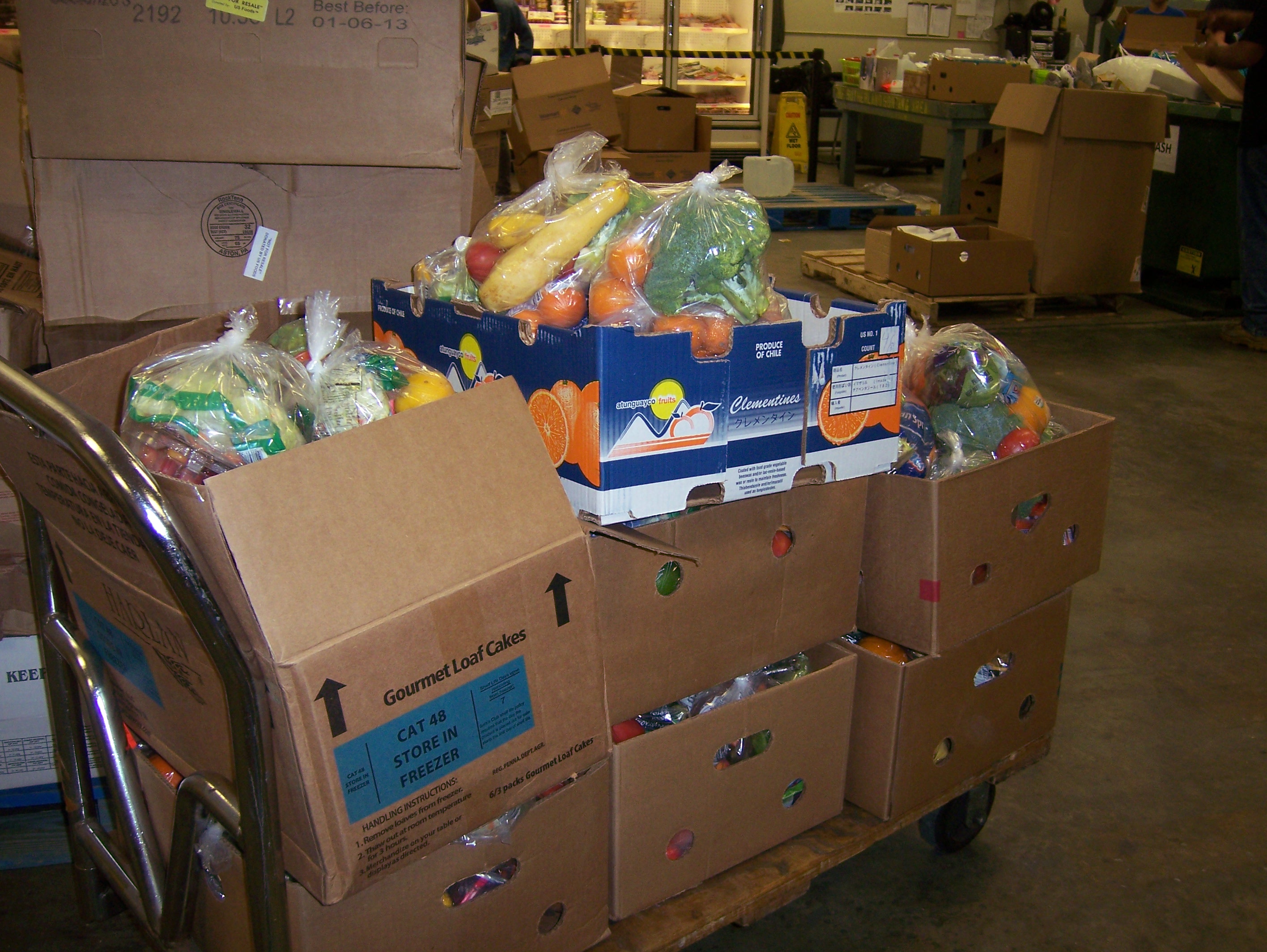
I have been working on my practicum for some time, but this is my first time to post on the MPHN blog. My overall goal for the practicum is to address and update the nutrition component of the Food For Kids Program (BackPack Program) at the Arkansas Rice Depot. I will work to develop a nutrition policy, which includes requirements and guidelines that outline not only the items that are acceptable to purchase/donation for the program based on their nutritional value, but also dictates how the food items are to be distributed to the children participating in the program.

I have found thus far, however, that less of my time has been spent creating the nutrition policy, and more has been spent researching and examining existing policies at other organizations. Much of my focus is determining the existing body of knowledge and compiling that information in order to develop a policy that best serves the Arkansas Rice Depot based on best practices and the successes of similar, existing programs.

My practicum has been going well thus far, and I am learning a lot about different nutrition policies at Food Banks across the country. I reached out to Dr. Schwartz who is the director of the Yale Rudd Center for Food Policy and Obesity – she is one of the authors of the study A Qualitative Study of Nutrition-Based Initiatives at Selected Food Banks in the Feeding America Network– to inquire about possible contacts. She responded to me and shared suggestions for food banks that I should consider contacting that have solid nutrition policies in place.

From there I have started reaching out to contacts and arranging times to talk about nutrition policies at their facilities. I am hoping that through this process I can learn more about what other organizations are doing and what might work or not work for the Arkansas Rice Depot. Once I have information from the different contacts compiled I can develop something that will work for the Rice Depot and meet its specific needs. I am finding that quite a few organizations are starting to take notice of nutrition and they are willing and happy to share what they have done. I think we can learn from established programs and their successes – no need to reinvent the wheel.

Looking forward to sharing my next status update soon!


Emily
IFIC Practicum Update: C-FAR Ag Sustainability Presentation

International Food Information Council, Practicum Update

One of my “side jobs” as an intern with the International Food Information Council is to attend relevant meetings and presentations that happen around Capitol hill and report back findings and key takeaways. I attended the National Coalition for Food and Agricultural Research’s Lunch and Learn on the hill yesterday and wanted to blog about it because I found it quite informative – especially since this is not a subject I get a lot of exposure to in my day job at General Mills.

“The Role of Sustainable Agriculture Initiatives in Global Competitiveness”
Dr. Marty Matlock, University of Arkansas & Program Director Center for Agricultural and Rural Sustainability

What I found most interesting was Dr. Matlock’s remarks regarding the bottom billion – those who are hungry and malnourished. He stated that their caloric needs could actually be met with today’s production (the calories end up getting lost in the food stream), but the problem is they can’t afford to buy food. And, its not all about calories – quality and nutrition matter. Additionally, he reinforced the need for farmer-driven metrics, increased global demand and production, and how it cannot be a top–down approach – it needs to come from the producers. Last but of course not least: US ag producers are most sustainable across every category of indicators.

Other key takeaways from the session:

Population – by 2050 world population of 9 billion.
Human Prosperity – it allows us to expand across current constraints.
Good science, good data to help people prosper
Women are becoming increasingly more empowered and providing societal benefits
We have secured prosperity (feeding) for a population circa 1996 – US is hitting a record number of exports this year. South Africa/Tanzania are exploding – new opportunities
The next 10 years will determine earth and humanity for the next 100 years.
Cultures either change and adapt or go extinct.
Complex food supply chain
Focus on 3 key factors: SAFETY, SECURITY, STABILITY
Challenges for Agriculture: Increased production to meet demand
If demand is not met, US and EU will need to increase production even more
Sustainability: Need metrics that work
Need for sustainability index focused on the concept of “ADAPT and MANAGE”
With key performance indicators, benchmarks, implementation strategies
Biotech barriers are coming down and sustainability tariffs are coming up to protect change- Eco-colonialism in Africa
Criteria for Metrics of Sustainable Agriculture: Outcome-based, Science-Driven, Technology neutral, Transparent
Top 3 environmental performance indicators for Agriculture: Greenhouse gases, energy use, water use
Need sector level and national level life cycle assessments (not on the farm level), and data source is critical.
Need to respect land ethics of farmers
Food Manufacturing Delivering sustainable benchmarks:
Increased productivity, Improved environment, Improved social and economic well-being of agricultural communities (equal wages for farm workers).
Next 10 years:
We will see improvements in water-efficiency, wheat production increase 50% globally, and sustainability barriers going up

A great question was asked regarding the need for metrics and what about the developing nations who can’t afford it? Dr. Matlock’s response: We need to move away from subsistence agriculture. They need incentives to offset the cost of implementation.

A very hot topic right now….I hope this recap is helpful and that you find Dr. Matlocks points as interesting and informative as I did!
Nicole

Nicole Miller – Practicum Blog

Hi Everyone,

My practicum has been in progress for a while, but this is my first blog entry to share the activities I have been involved with.  For my practicum, I wanted to gain more experience with nutrition related research.  I started working with two professors at a large local university (University of South Florida).  Both are involved in very different and interesting research projects.


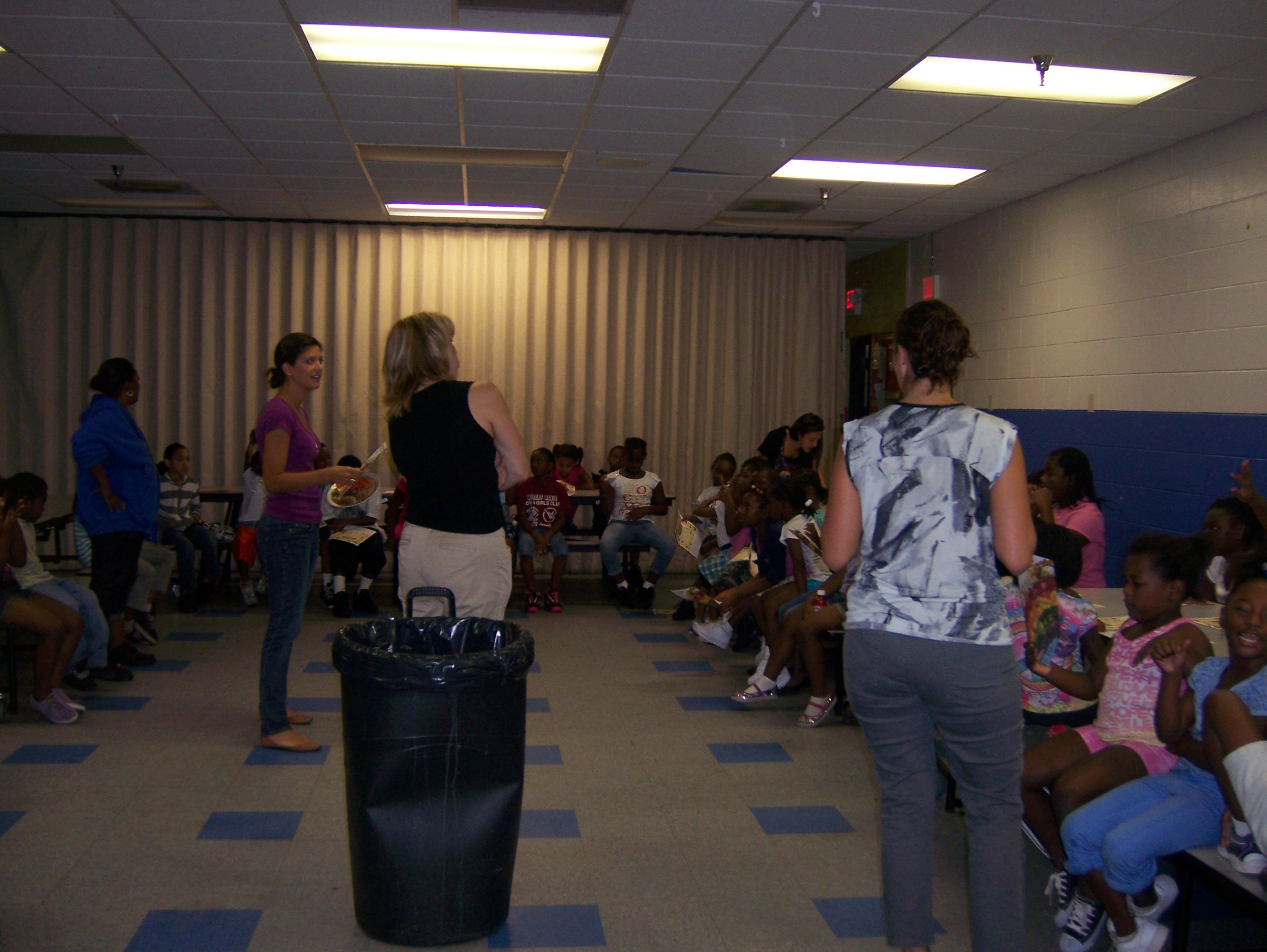
My work with Dr. Lauri Wright initially involved work with a Feeding America/Kid’s Café project.  The purpose of the project was to develop a nutrition education program to promote fruit and vegetable intake in children from food insecure households.  Prior to my starting work with this project, Dr. Wright had already designed the intervention and received a generous grant from Feeding America to cover the expenses.  The project was conducted through a Boys and Girls Club in the Sulphur Springs community (a lower-income area) of Tampa, Florida during summer of 2012.


Upon my getting involved with this project, I designed educational materials on the importance of eating more fruits and vegetables which where used in the education of both children and parents involved in this program.  On multiple occasions during the project, I assisted in the creation and distribution of fresh produce gift bags (donated by Feeding America) to the children and families participating in the intervention.  I also had the opportunity to help with classroom based educational program (primarily focused on increasing intake of fruits and vegetables).  We taught the children about the importance of eating a “rainbow” of different fruits and vegetables, and provided them with a healthy snack (ladybugs on a log: celery with peanut butter and dried cranberries).


As part of the research experience I gained from this community intervention, I helped gather data on anthropometric measures and estimates of reported fruit and vegetable intake via survey of the participating children.  I then entered the data for approximately 50 pre and post surveys collected during the program into an excel spreadsheet.  In meetings with Dr. Wright, we have already noticed trends in the data collected (for example, %ile of BMI was overwhelmingly high, suggesting a high prevalence of overweight and obesity in the subject group).  The official statistical analysis of the data is currently being conducted by the department statistician.  I look forward to sharing the results during my practicum presentation.  Overall, it has been great to be involved in all aspects of this project, and to gain some experience with real hands-on public health nutrition related research.


Nutrition Class for Kid’s Café (all participants had given permission for photos to be taken)


Healthy snack provided to children during intervention


Bags of produce handed out during the Feeding American Project


My other area of work has been with Dr. Uusitalo and the TEDDY study (The Environmental Determinants of Diabetes in the Young Study).  This is a large epidemiological study that is focusing on exposures early in life (particularly infant feeding practices) and later onset of Type 1 Diabetes.  I am extremely impressed with the depth of this epidemiological data.  The data collection has been ongoing for approximately 4 years, and will continue for an additional 11 years.  The subjects are in 4 different countries, with a total of 8 sites of data collection total (4 in the U.S., 3 in Europe).  The database is extensive and includes a wealth of information on the socio-demographic and nutritional habits of a cohort of mothers and newborns.  Dr. Uusitalo is the main project coordinator; together we brainstormed ideas for small data analysis that she would like us to look at together.  In order to better understand the data, I have also done a review of current literature on health outcomes related to infant feeding practices (especially duration of breastfeeding).  Additionally, I have helped Dr. Uusitalo with coding some of the “missing” items in food database that the project utilizes.


My work with this project has allowed me to better understand the world of epidemiological research, and has given me more practice working with statistical analysis.  I am hoping that my work with this research during my practicum will provide the foundation to possibly complete an independent study that would involve coming up with a research hypothesis and using the TEDDY database to test the hypothesis.


Food insecurity and Independence day

Hello all,
After a slow start, my practicum is taking a clearer form and a firmer shape. It involves working with a small group of residents in a low-income housing assistance unit in Mashpee, MA. The place is called Mashpee Village(http://www.mashpeevillage.com/ ). It is an initiative of a non-profit organization called The Community Builders, Inc ( http://tcbinc.org/ ) . For this practicum, I am working with the resident services coordinator of Mashpee Village (Karen) and another consultant (Mary Jane) who is consulting with Mashpee Village management to improve the life-skills for these residents. I am near the end of my needs assessment phase. So far, the needs that stand out can be grouped into three categories are:
1. Knowledge – General Nutrition Knowledge
2. Self-Efficacy – Skills to cook healthy meals and shop for healthy foods in
low-budget
3. Self-Reliance – Skills to garden vegetables and access existing local food
resources available for low-income households.
One of the key components of the needs assessment is participatory needs assessment where the members of the group who will the target population will actually be part of the decision-makers in coming up with the nutritional needs and prioritizing the goals and objectives. The technique I am using is ‘photo voice’ (.http://heb.sagepub.com/content/24/3/369.short ) Three cameras will be loaned to the group next week so that that can take pictures and share their stories around of both pride and need around food issues. The results of the photo voice project will help to prioritize the needs and goal& objectives of the program. I will keep you posted next week as to how the photo voice project went and try to upload some of the pictures and stories.
The idea is to see how these individuals from low-income households can become more self-reliant with regard to food security as well as gaining more nutritional knowledge and skills. As we carry fresh memories of celebrating Independence day yesterday with friends and families, the goal of this practicum is to see if this group of individuals can become less dependent and more self-reliant. The word depend is derived from Middle French word dependre (15th century), meaning “to be attached to as a condition or cause.” Food insecurity is keeping this group of individuals attached to systems of dependence. Hopefully, the practicum can do some good to make them more independent! I am positive that, personally for me, it is going to a learning curve that will be rewarding and fulfilling.
Until next week,
Kumara

Fair Share Project, Gettysburg, PA

Hello!  I’m Audrey Hess in Gettysburg, PA.

I have been working gradually since the New Year on aspects of my Practicum as our Adams County Food Policy Council prepares for a second year of the “Fair Share Project.”  The program is designed to reach out to families who are in the “food gap”–above the SNAP cut-off yet with challenges in financially accessing adequate healthy foods.  For each of four months from June-September, the families receive $40 in vouchers for shopping at three local farmers’ markets.  Participants will choose from activities such as picking up nutrition information and talking with me at the farmers’ market, cooking or gardening classes, a farm tour, and participation in a photovoices project to share their food experiences with each other and hopefully in a community forum.

My current activites with the project are following-up with last year’s participants who are interested in returning, interacting with the community agencies that are providing new referrals for this year, and continuing to coordinate meetings every 2 or 3 weeks with our Fair Share advisory group.  A public health professor from Gettysburg College is taking the lead on development of our pre- and post-surveys as well as inspiring us in the development of the photovoices component.  I am priveleged to work with her as well as the various other members of the advisory group (community RD, CSA farmer,  Gettysburg College Center for Public Service staff and students and a local community health coalition executive director–my practicum supervisor).